
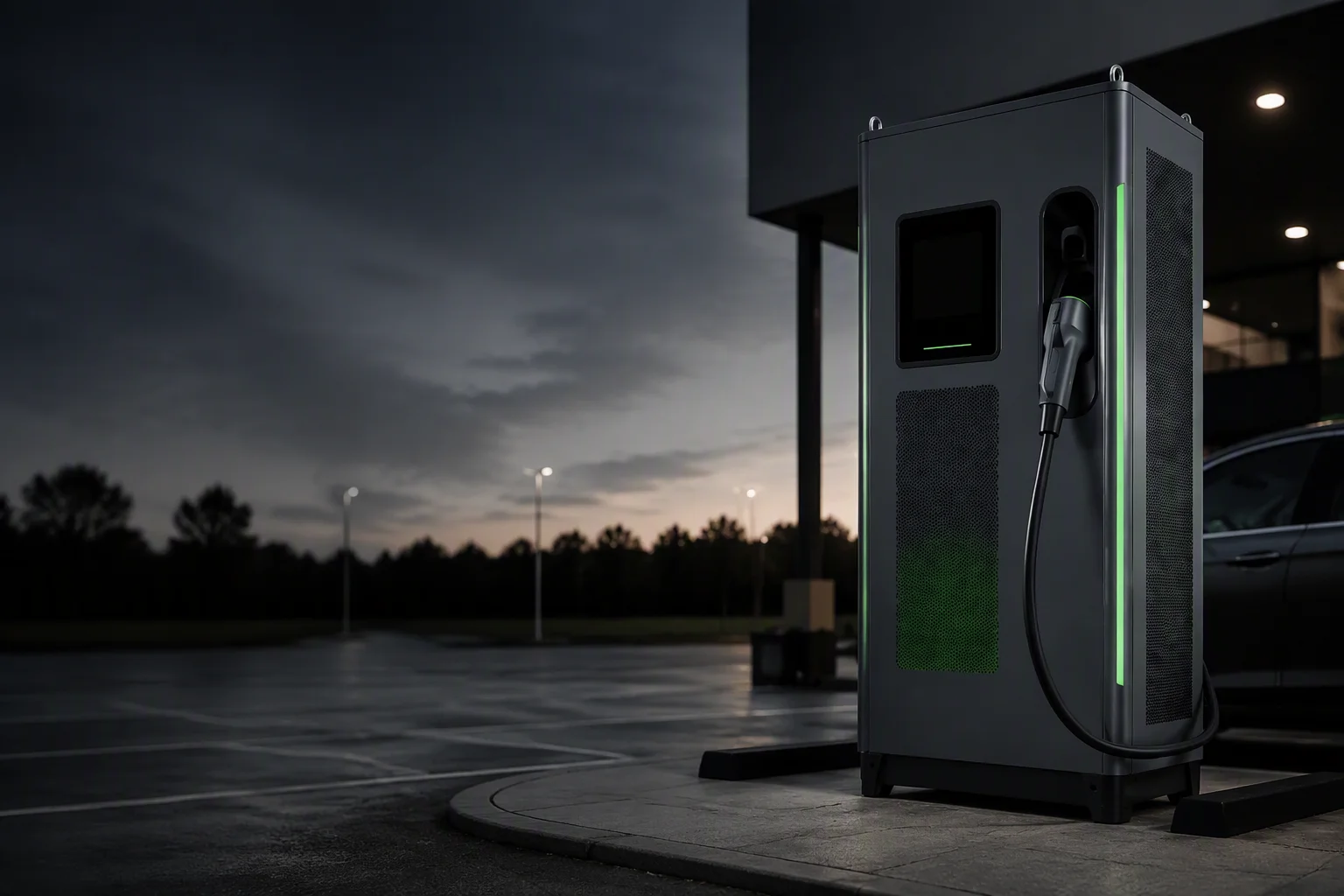
The module at the heart of every fast charger
Every DC fast charger is a stack of power modules. ems-charge builds two — a 30 kW air-cooled workhorse and a 40 kW liquid-cooled SiC unit — both outputting 200–1000 VDC and reaching 96.5–97.5% peak efficiency. They are made for the charger OEMs and integrators who need the component that decides uptime, heat and the final energy bill.
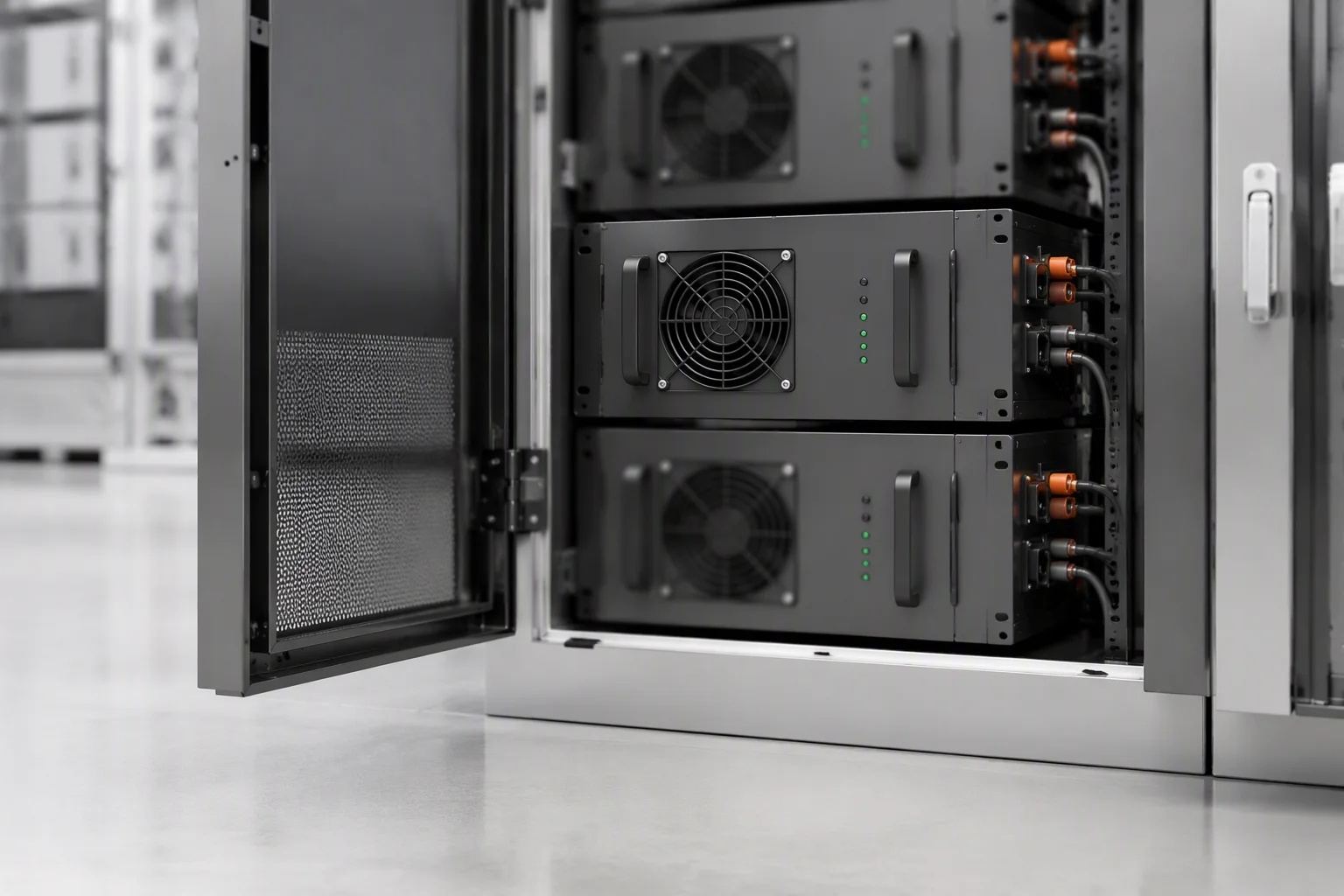
30 kW Charging Module
96.5% peak efficiency, 200–1000 VDC output, forced-air cooling and EMC Class B — the field-proven workhorse for 30–120 kW DC chargers.
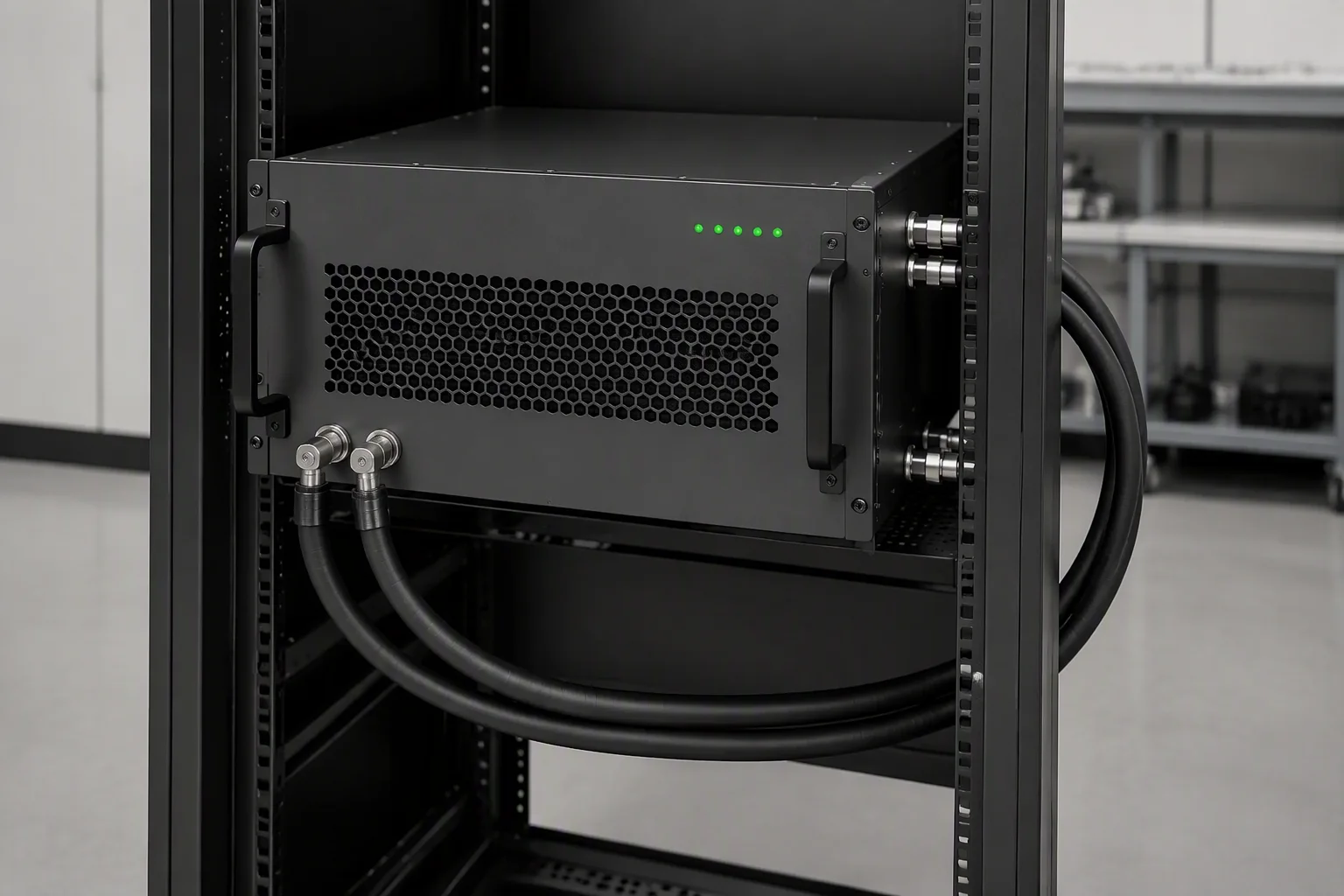
40 kW Charging Module
97.5% peak efficiency on silicon carbide, G65 coolant that cold-starts at −40 °C and more than 80,000 relay cycles — for 120–360 kW ultra-fast chargers.
Two modules, one output range.
Both modules take three-phase 400 VAC and deliver a wide 200–1000 VDC output, so one platform covers 400 V and 800 V battery packs without a redesign. The 30 kW relies on forced air; the 40 kW uses G65 coolant to hold 97.5% at peak and 96.8% at full load while cold-starting from −40 °C.
| Parameter | 30 kW air-cooled | 40 kW liquid-cooled |
|---|---|---|
| Rated power | 30 kW | 40 kW |
| Input | 3-phase 400 VAC | 3-phase 400 VAC |
| Output voltage | 200–1000 VDC | 200–1000 VDC |
| Peak efficiency | 96.5% | 97.5% |
| Cooling | Forced air | Liquid (G65) |
| EMC | Class B | Class B |
| Communication | CAN | CAN |
| Certifications | CE · TÜV · cTUVus | CE · TÜV · cTUVus |
Silicon carbide changes the arithmetic.
The 40 kW module switches on silicon carbide MOSFETs where a conventional module uses silicon IGBTs. The result is measurable: more of the grid's energy reaches the battery and less is dumped as heat that the charger then has to remove.
| Metric | IGBT topology | SiC topology |
|---|---|---|
| System efficiency gain | Baseline | +5–10% |
| Cooling volume | Baseline | −30–40% |
| Combined-stage efficiency | 94–95.5% | 97–98.5% |
| Thermal conductivity | 150 W/m·K | 490 W/m·K |
| Switching frequency (with LLC) | Lower | 80–150 kHz |
Cooled to keep charging, even at −40 °C.
Liquid cooling removes heat at the source instead of pushing air through a dirty, noisy cabinet. G65 coolant keeps the module cold-starting at −40 °C and running flat-out without derating, while standby draw sits at just 13 W.
- G65 coolant starts from −40 °C, so cold-climate depots and corridors stay online through winter.
- 13 W standby keeps overnight energy waste near zero across a full cabinet.
- −30–40% cooling volume versus an IGBT design means smaller chargers and a lower BOM.
Built to drop into your charger.
The modules are made for the integrator, not the end user: CAN control, rack-mount hot-swap and a Vienna-rectifier-plus-LLC stage that holds THDi under 5%. At the charger level, lifting efficiency from 94% to 96% saves a 120 kW unit around 4,380 kWh a year — energy that would otherwise be lost as heat.
- CAN bus for module-level status, derating and fault reporting straight into your charger controller.
- Hot-swap rack mounting so a failed module is replaced in minutes, not hours.
- EMC Class B keeps the module quiet in indoor and residential-adjacent installs.
Get module samples and a datasheet in 48 hours.
Tell us your charger's target power, cooling preference and certification market — we reply with the matching module spec, sample lead time and volume pricing.
Send Inquiry